
Automated Brake Press Tending Helps Thunder Creek Increase Output and Reduce Labor Strain
Thunder Creek Equipment automated brake-press tending with a FANUC R-2000 robot, boosting throughput, safety, ergonomics and labor efficiency.
- Solution By
-
- Published
- Last Updated

Challenges
Hard labor process required repetitive lifting of heavy and awkward steel plates
Difficulty staffing the application due to physically demanding role and safety concerns
Inconsistent throughput due to manual handling
Aging panel former underperforming and consuming valuable floor space
Results

Operators redeployed to higher-value tasks

Increased throughput and consistent cycle times

Greater consistency created more accurate automated welding downstream

Automated process removed employee pain point
Story
Thunder Creek Equipment, headquartered in Pella, Iowa, manufactures high performance fuel and service trailers for construction, agriculture and heavy equipment industries. As demand for its rugged, precision built products continued to grow, the company began looking for ways to strengthen efficiency on the production floor. One of the most labor intensive areas was brake press tending, where operators manually loaded and unloaded heavy steel plates—some over six feet long and weighing more than 150 lbs—throughout each shift. The work was repetitive, physically demanding and created a safety hazard on the manufacturing floor.
Thunder Creek needed a solution that would improve consistency, reduce physical strain and keep production flowing. To address these issues, they partnered with The Way Automation, a system integrator known for its expertise in machine tending applications.
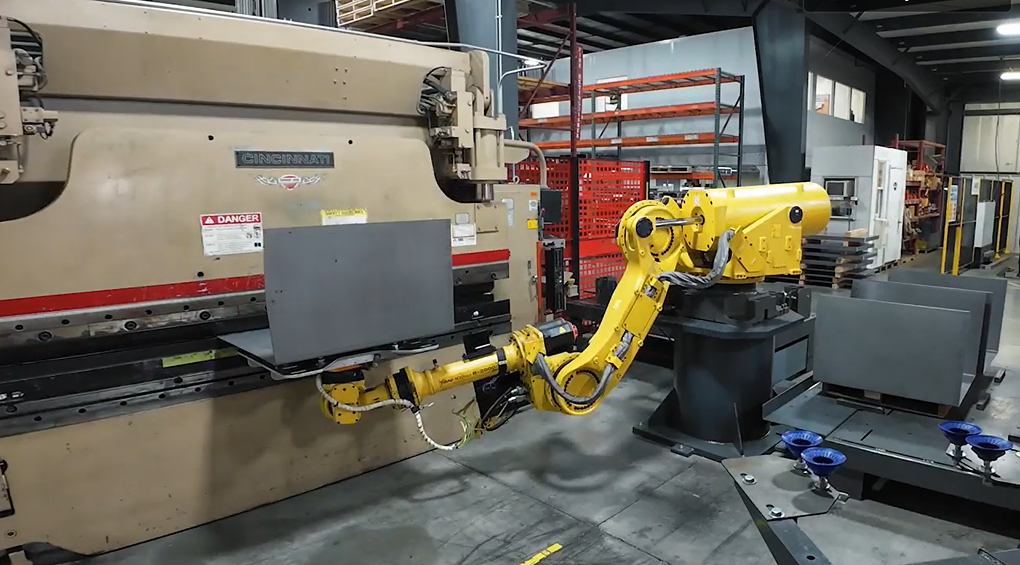
Working together with Thunder Creek, The Way Automation designed a robotic cell that automated the entire loading and unloading process on a Cincinnati 135-ton press brake, leveraging FANUC’s heavy-payload R-2000 robot to pick, position, and form the steel plates with precision. The cell replaced an underperforming panel former, maximizing parts produced per square foot in a tight production area. Even during install, as Thunder Creek tweaked their preferred layout, The Way Automation’s team reacted nimbly, rolling with changes to find the best solution for the manufacturing facility.
The automated cell immediately delivered measurable improvements: higher throughput and consistent cycle times, and more efficient use of labor, all without the ergonomic concerns and safety issues that previously existed. Operators who once spent their shifts manually tending the press can now support higher value tasks elsewhere in the plant. The robot’s precision also ensures repeatable part positioning and bend accuracy, improving overall quality—even downstream, where the welding robot now operates with a higher accuracy due to increased brake press consistency. Despite the sophistication of the system, operators find it intuitive and easy to run—even without prior robotics experience. In fact, the success of the first cell has already led to a second FANUC-powered press brake tending system, currently being installed alongside the original.
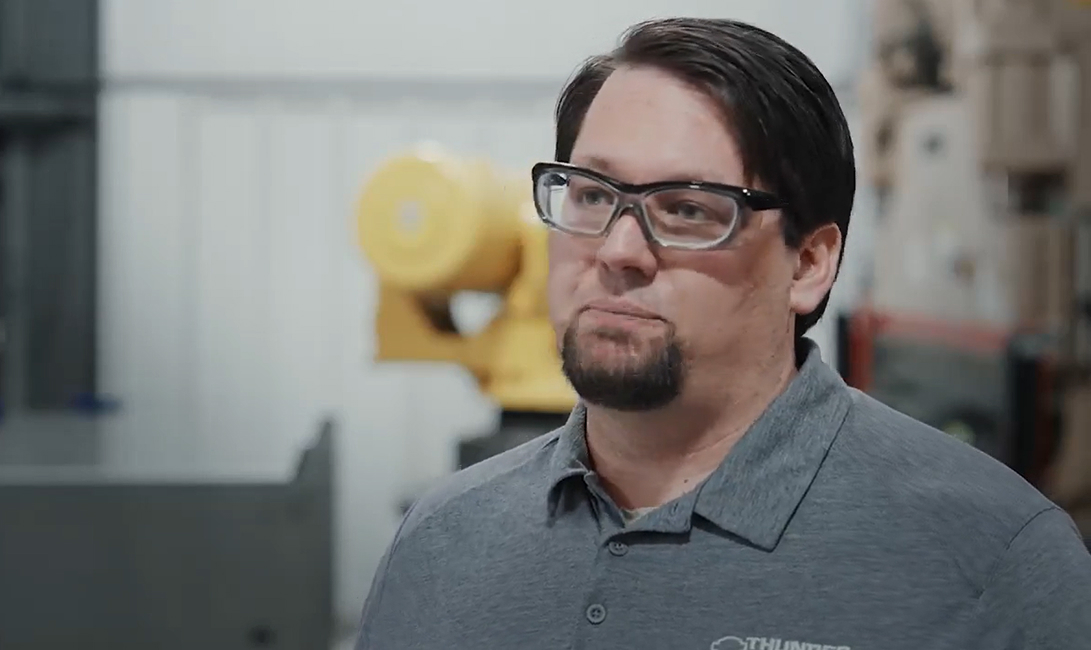
This is our first automation for brake press tending, so there’s a lot of unknowns from our part, but everything has paid off wonderfully. We’ve seen a lot of gains from it, less scrap. We’ve seen higher output from the cell.
Garrett Duchow Manufacturing Engineering Manager – Thunder Creek Equipment
The Way Automation
The Way Automation LLC is a FANUC Authorized System Integrator based in the central U.S., with facilities in Oklahoma, Texas, and Arkansas. The company designs, builds, and supports custom robotic cells around its customers' existing equipment and floor space — including retrofits to press brakes, CNCs, and other machines already on the production floor. Its Press Pilot product line brings standardized robotic press brake tending to manufacturers who need to move heavy, awkward parts without wearing out their people. American-built systems, U.S.-based support.
Thunder Creek
Thunder Creek Equipment is the recognized leader in premium, mobile fuel and service equipment. Our goal is to provide innovative solutions that address challenges related to fuel delivery and servicing for heavy, off-road machinery.
Quality is at the heart of everything we do, ensuring that our products stand up to the rigors of the field and jobsite. Furthermore, we're committed to continuous improvement, constantly pushing the boundaries to create equipment that not only meets but exceeds the evolving needs of professionals across various industries.