
Painting in Partnership: Regal Finishing Elevates Its Paint Operations with RTSS’ Automation Solution
Regal Finishing partnered with RTSS and FANUC to automate painting, consolidating complex processes into a single system for consistency and efficiency.
- Solution By
-
- Published
- Last Updated

Challenges
Multiple stage paint process
Excessive part handling
High scrap and rework levels
Skilled labor hurdles
Throughput limitations
Results

Improved overall daily throughput by about 125%

Reduced scrap and rework, part handling and process complexity

Increased first run good parts by about 35%

Consolidated paint process into a single, four-stage automated line

Redeployed skilled painters, requiring only for specialized customer requests

Established a consistent, repeatable coating process to support new customer acquisition and future growth
Story
For decades, Regal Finishing has earned a reputation for delivering high quality coatings in applications where consistency and performance are critical. As product complexity increased and quality expectations rose, Regal’s traditional painting operations became increasingly difficult to manage. Multiple paint lines, excessive part handling, and rising scrap levels needed to be resolved so the company’s growth could continue.
To overcome these challenges, Regal Finishing partnered with Robotic Technical Support Services (RTSS) and FANUC America to design and implement a fully automated robotic paint line. The objective was straightforward: consolidate painting into a single, end-to-end process that would improve consistency, reduce waste, and increase throughput while maintaining the level of quality customers expect.
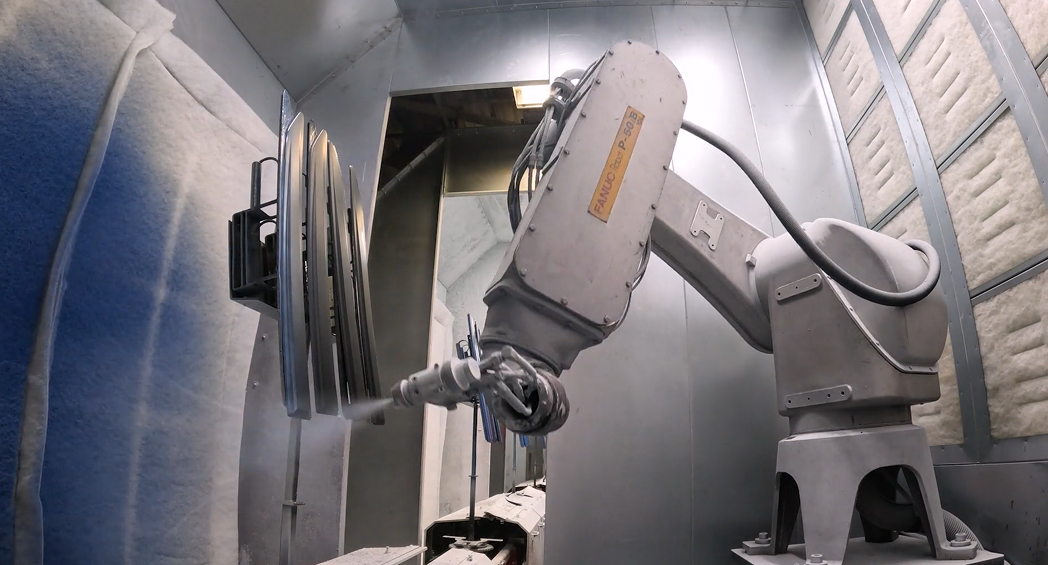
The new system, integrated by RTSS, features FANUC P-50iB paint robots arranged in a multi-zone, conveyor-fed layout. This configuration allows Regal to apply multiple coatings — primer, base, specialty finishes and clear coat — in one pass. By consolidating operations into a single line, Regal dramatically reduced part handling while improving first pass quality and overall efficiency. Just as important, the modernized facility reflects Regal’s long term commitment to advanced manufacturing and continuous improvement.
Since implementing the automated paint line, the company has seen significant measurable improvements across its operation. Previously, the process required six painters across four manual paint booths and two older automated lines.
A review of two part numbers being produced by Regal and show the benefits of the collaboration with RTSS.
Part #1:
- Prior to the new robotic paint line about 150-175 pieces were produced per shift.
- After integration of the new automation system, production ramped up to about 300-350 pieces per shift.
- That’s a 133% increase throughput and approximately a 35% improvement in first run good parts.
Part #2:
- Prior to the new robotic paint line, production totaled about 300-400 sellable pieces per shift.
- After integration of the new automation system, production is about 600 – 700 sellable pieces per shift.
- That’s approximately a 75% increased throughput and about a 35% increase in first run good parts.
Labor and Material Savings, and Line Utilization:
- Produced 50% salary savings, down from six painters to only three operators required.
- Paint material usage has seen about 10-15% cost savings.
- Including increased throughput, and the line has availability for about 33% more utilization.
Not only does the data show greater output and lower costs, but it also means increased profits and greater confidence in meeting customer demand.
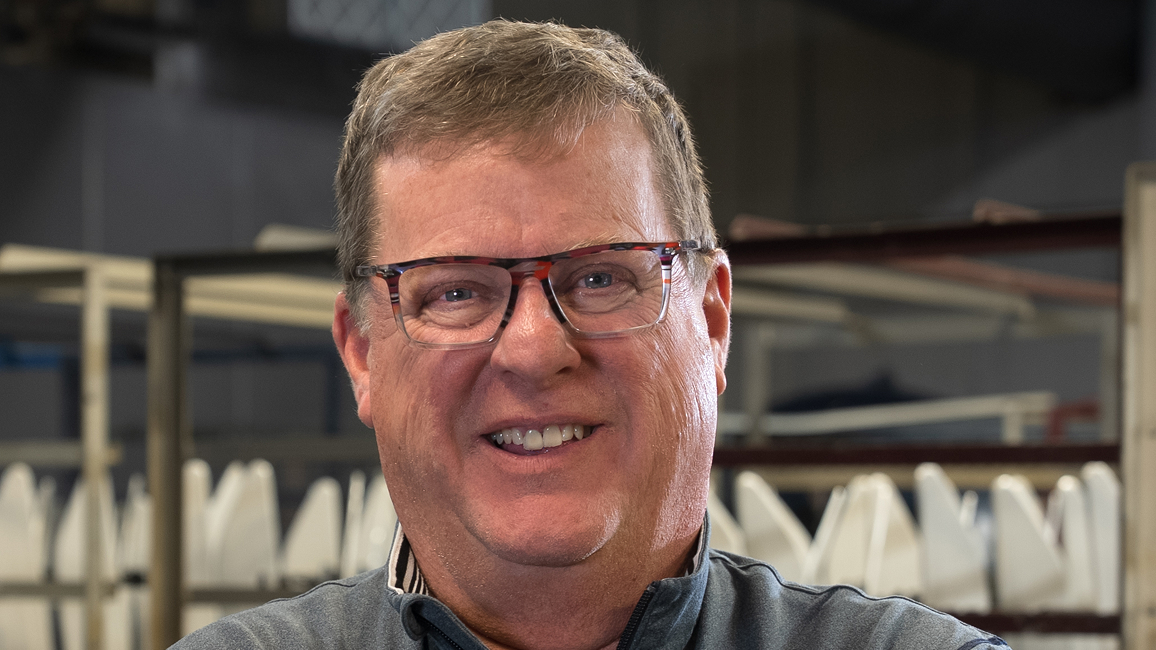
Our customers and potential customers can see we’re committed to the future. Our willingness to commit to automation makes a statement that says we’re going to be around a long time.
Jim Kodis President – Regal FinishingFANUC Products Used

P-50iB/10L
The FANUC P‑50iB/10L is an ultra compact, high reach paint robot that provides a reliable and precise painting and coating solution for a huge range of industries.
- Max Payload:
- 10 kg
- Reach:
- 1800 mm
Robotic Technical Support Services, Inc. (RTSS)
RTSS has been providing solutions since 2012. RTSS designs and delivers turnkey industrial robotic systems for factories and manufacturers. Programming and preventive maintenance services are additional key services RTSS provides to keep its customers making parts and profits. One primary specialty of RTSS is robotic paint, spray and dispense applications. RTSS also delivers robust automation solutions for machine tending, material handling, and palletizing. RTSS understands the intricacies of engineering automation processes and works closely with its customers to deliver exceptional solutions that exceed their expectations.

About Regal Finishing
Regal Finishing is located in Coloma, Michigan. The company provides customer finishing solutions to customers in the aerospace, appliance, automotive, cosmetics, communications, hardware, electric, lighting, medical and transportation industries. Regal Finishing vacuum metallizes, EMI/RFI shields, paints, pad prints, and sub‑assembles for production and development projects. In addition to finishing customer supplied parts, Regal Finishing also partners with injection molders, blow molders, extruders, metal formers and casters to offer a complete product.