

Challenges
High-mix production environment with constantly changing part geometries
Inconsistent sanding quality and cycle times caused by manual processes
Workforce turnover and training demands for new employees
Costly fixture requirements associated with traditional automation
Results

Improved sanding consistency and finish quality

Reduced rework and greater process predictability

More stable cycle times and production throughput

Faster production ramp-up and scalability

Employees transitioned into higher-value roles rather than being replaced by automation
Story
Since 1955, Productive Plastics has evolved from a pattern shop into a heavy-gauge thermoforming manufacturer serving customers across a range of industries. Now led by the third generation of the Gilham family, the Mount Laurel, N.J., company has continually adapted to meet changing customer demands.
As business grew, however, one finishing process became increasingly difficult to scale. Manual sanding required skilled workers, delivered inconsistent results and created production bottlenecks, particularly in Productive Plastics’ high-mix manufacturing environment, where nearly every part is different.
The Challenge of High-Mix Manufacturing
Unlike manufacturers that produce large volumes of identical products, Productive Plastics regularly processes parts with varying sizes, shapes and geometries. That variability made traditional automation difficult to justify. Many automation solutions required dedicated fixtures and programming that were difficult to adapt to constantly changing part designs.
Manual sanding added another layer of complexity. Because the process depended heavily on individual operator technique, differences in pressure, angle and experience could affect both finish quality and throughput. Cycle times on identical parts could vary by as much as 50% depending on who performed the work.
At the same time, workforce turnover created additional challenges. New employees often entered manufacturing with little finishing experience, making training more demanding and increasing the risk of defects. Productive Plastics needed a way to deliver a consistent finish while reducing its reliance on highly specialized manual skills.
Finding a Different Approach
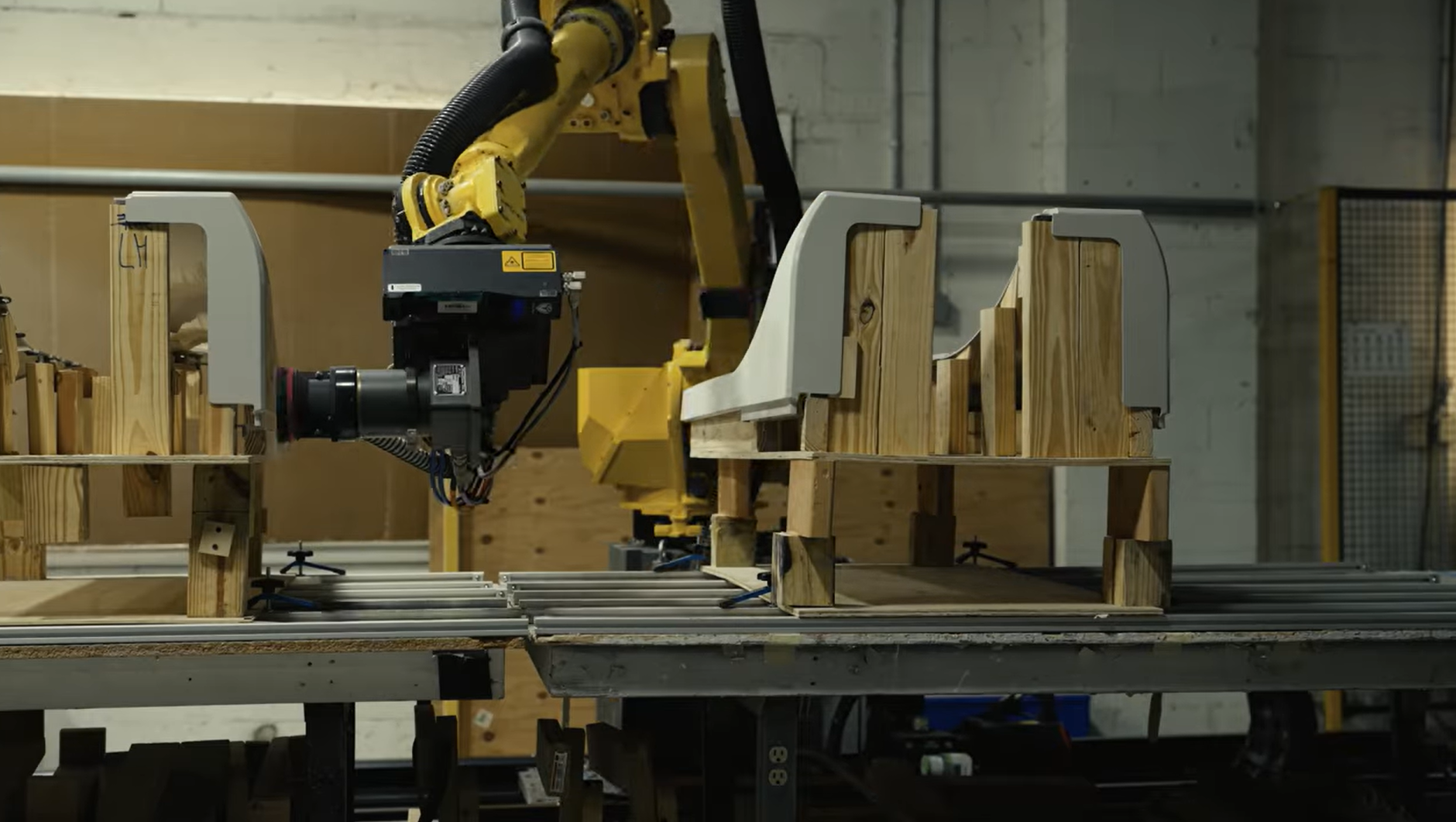
The company explored automation as a solution but struggled to find technology capable of handling its high-mix environment until finding GrayMatter Robotics' Scan&Sand™ system. Powered by a FANUC M-710 industrial robot, the solution combines AI-driven scanning and adaptive automation to address the challenges of sanding parts with varying shapes, sizes and geometries.
Rather than relying on fixed programming and custom fixturing, the system scans individual parts and automatically adapts to their geometry before sanding. The technology identifies parts, determines their location and generates the sanding path needed to achieve a consistent finish.
“I think one of the things that surprised me the most about the Scan&Sand system was not the sanding portion of it, but the scan portion,” said Norman Vaughn, Operations Vice President, Productive Plastics. “It will scan the parts and recognize the parts before it actually does the sanding.”
The ability to accommodate different part geometries without extensive setup gave Productive Plastics the flexibility it had been seeking and eliminated many of the limitations that had hindered previous automation efforts.
Improving Quality and Predictability
Productive Plastics quickly began seeing improvements in both quality and production consistency.
The automated process reduced the variability associated with manual sanding, helping create a more repeatable finishing operation. Improved consistency resulted in better quality parts entering the paint process, while reduced rework helped streamline overall production.
The company also gained greater visibility into production scheduling. With sanding times becoming more predictable, teams could better plan downstream operations and respond more efficiently to changing customer demand.
At the same time, production ramp-up became less dependent on how quickly new employees could master a difficult finishing skill. Instead, scaling output became more closely tied to available machine capacity, helping reduce pressure on both supervisors and operators during periods of growth.
Automation That Creates Opportunity
Like many manufacturers, Productive Plastics initially encountered concerns that automation would replace jobs. Instead, the company found automation created opportunities for employees to take on more valuable work and develop new skills and responsibilities. By reducing the amount of repetitive sanding work, employees were able to focus on paint correction, buffing and other finishing activities that add greater value to the final product.
Today, Productive Plastics views advanced automation as an important tool for remaining competitive while continuing to invest in its workforce. By combining AI-powered robotics with employee development, the company has transformed one of its most challenging processes into a scalable, repeatable operation capable of supporting future growth.
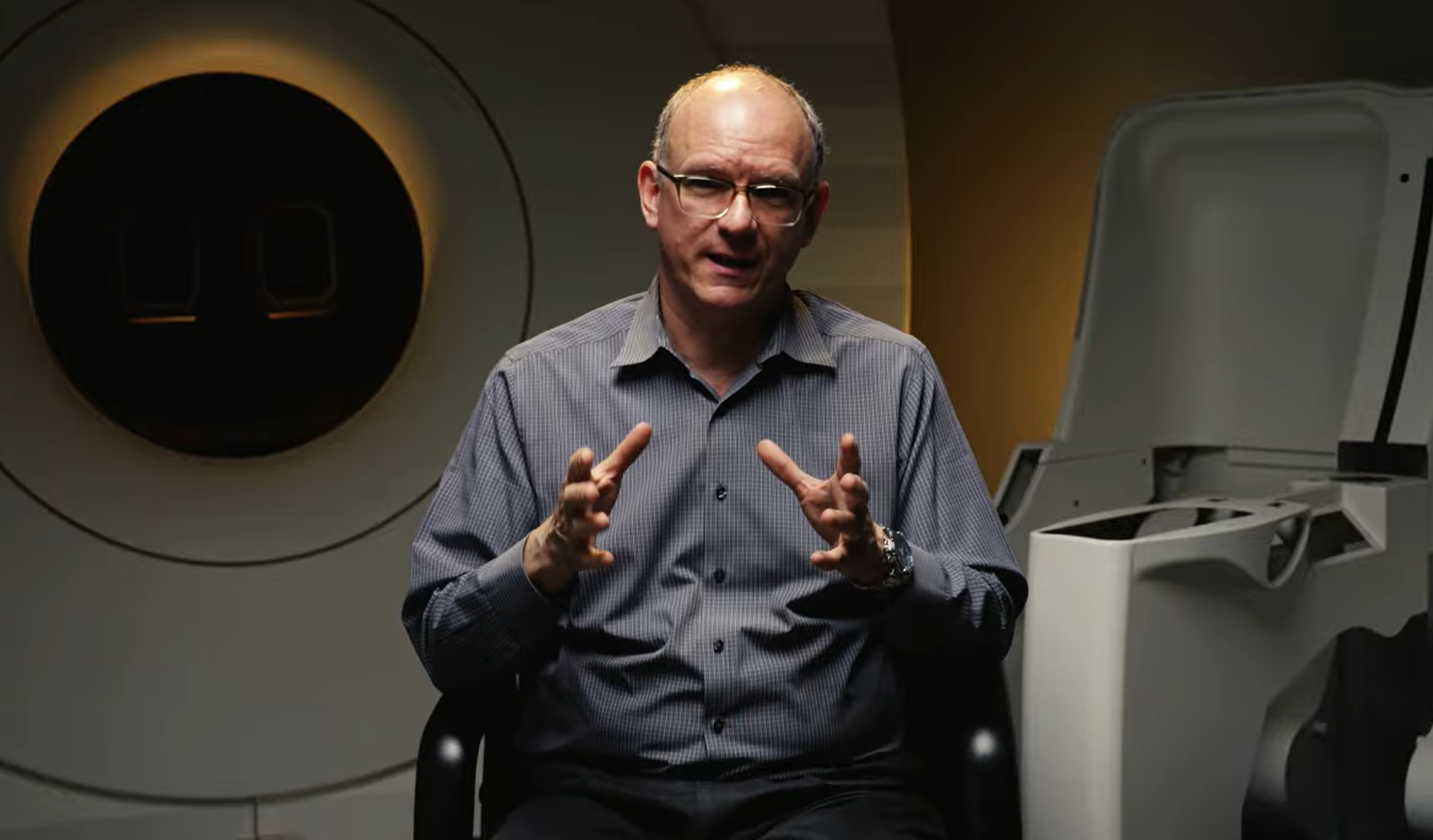
I was skeptical at first, but since we’ve implemented this (system), it’s been beneficial to us in making our products more consistent, with better quality coming out of the paint booth.
Norman Vaughn Operations VP – Productive Plastics, Inc.FANUC Products Used

M-710iC/50
The FANUC M‑710iC/50 is a compact 6 axis robot popular for machine tending, grinding, polishing, deburring, water jet cutting and washing applications.
- Max Payload:
- 50 kg
- Reach:
- 2050 mm
GrayMatter Robotics
At GrayMatter Robotics, we’re not just changing the game in manufacturing; we’re improving the quality of lives. Our mission is to empower manufacturers with smart robotic cells that boost production capacity and alleviate the physical strain of repetitive and ergonomically challenging tasks. In an industry where many workers endure the daily grind of manual labor, we provide a solution that not only lifts the burden off their shoulders but also opens up new avenues for career advancement. By transitioning from demanding roles to becoming skilled robot operators, employees can upskill, gain advanced competencies, or even step into management positions. This transformation allows them to thrive in their careers and enjoy a better quality of life.
Productive Plastics, Inc.
As a solutions driven plastic thermoforming company, Productive Plastics offers custom heavy gauge thermoformed plastic components and assemblies through processes such as pressure thermoforming and vacuum thermoforming. Throughout our history, Productive Plastics has always taken rapid notice of advances in plastics and manufacturing technologies. Adopting innovations and process improvements as quickly as possible, in order to afford our customers the finest quality, the most responsive services and maximum cost-efficiency.