CRX Series Cobots
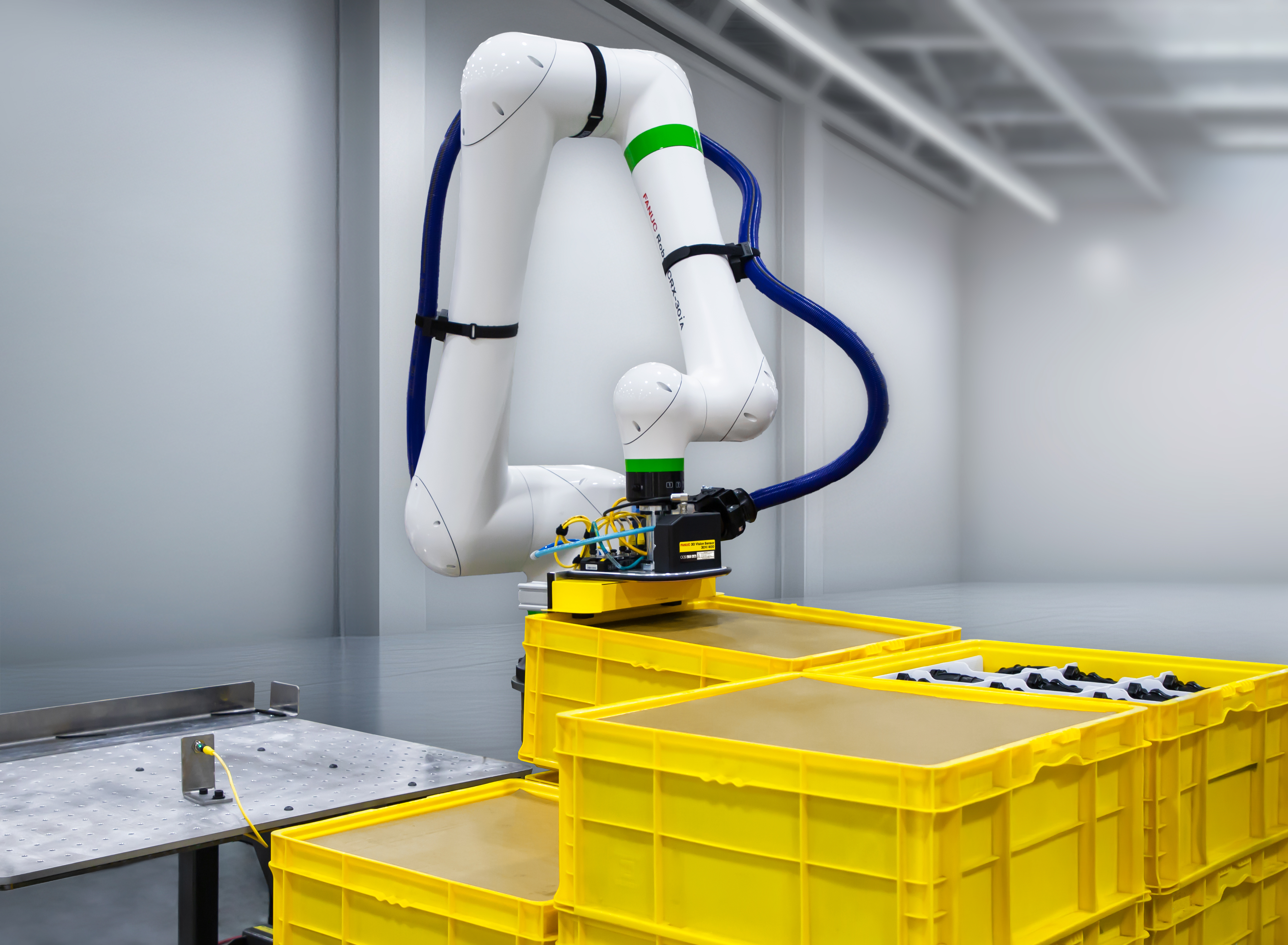
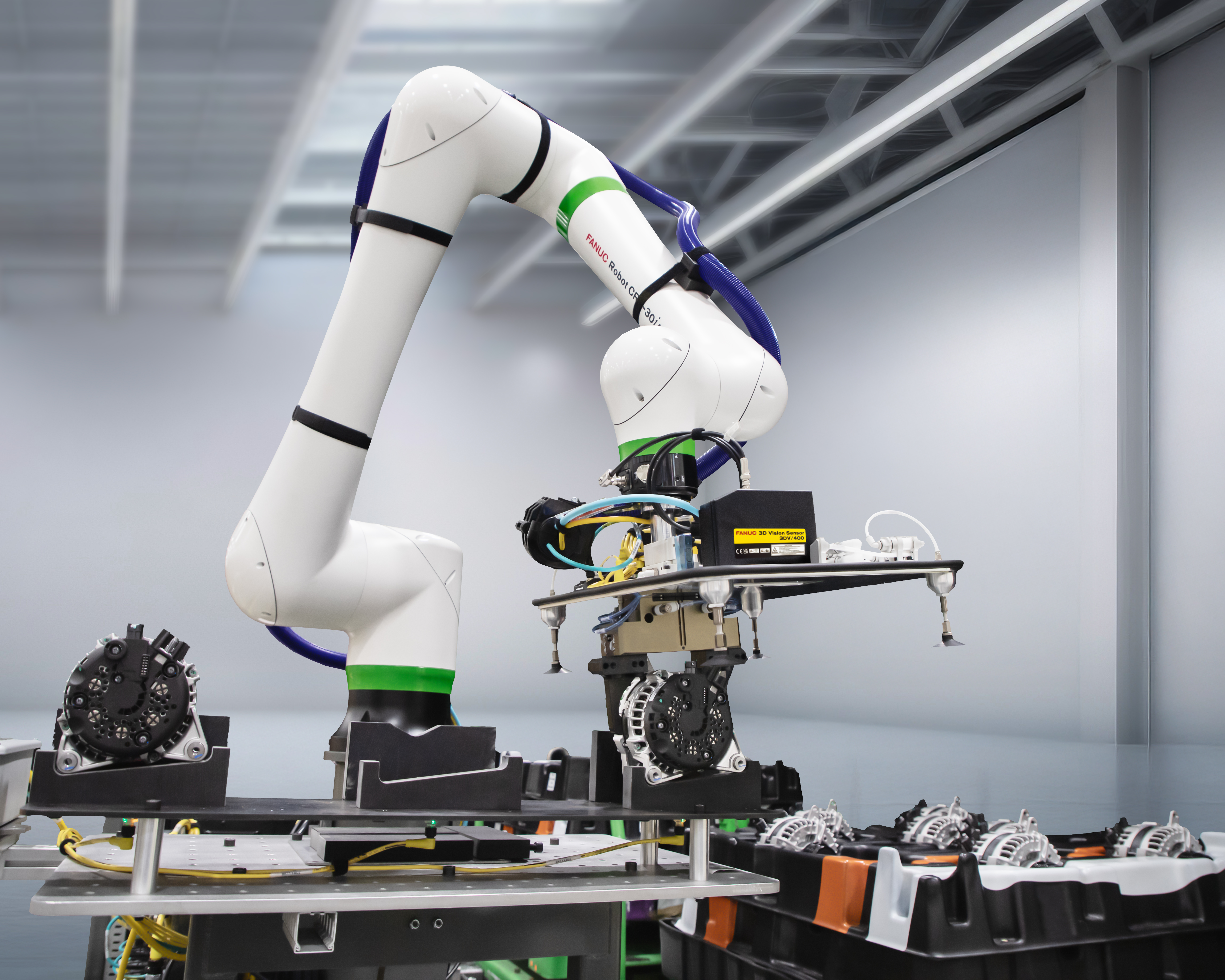
FANUC collaborative robots deliver safe, high‑precision automation with flexible payloads and easy integration for any production environment.
Need to move some parts? FANUC America offers an extensive lineup of material handling robots. These robots are equipped with iRVision and are capable of high speed transfer in a well-optimized system. With everything available from compact robot models designed to work in sensitive environments to heavy-duty robots, finding a material handling robot to suit your needs is easy.
From pick and place to dispensing, palletizing, packaging, part transfer, machine tending or assembly, automated material handling solutions are available to meet every need. FANUC America and our Authorized System Integrator Network work at any scale, supplying easy-to-use standalone solutions or fully integrated systems that automate every material handling process from front to end of line. Robotic handling solutions maximize your productivity by increasing throughput and extending operating times.
FANUC offers a wide range of material handling robots designed to support everything from compact pick-and-place tasks to heavy-duty lifting, palletizing, machine tending, part transfer, and packaging applications. Whether you need collaborative robots, SCARA robots, mid-range handling robots, or large-payload robotic material handling systems, FANUC has flexible automation solutions to help improve throughput, consistency, and productivity across your operation.
FANUC collaborative robots deliver safe, high‑precision automation with flexible payloads and easy integration for any production environment.
FANUCs LR Mate Series robots are your best compact robot solution for fast handling and processing parts up to 7 kg across a whole range of industries.
FANUC's SCARA Robots are a powerful pick-and-place robot solution for manufacturing operations that require increased speed and repeatability.
Boost palletizing throughput with FANUC M-410 robots—handling up to 800 kg with long reach and proven reliability for end-of-line automation.
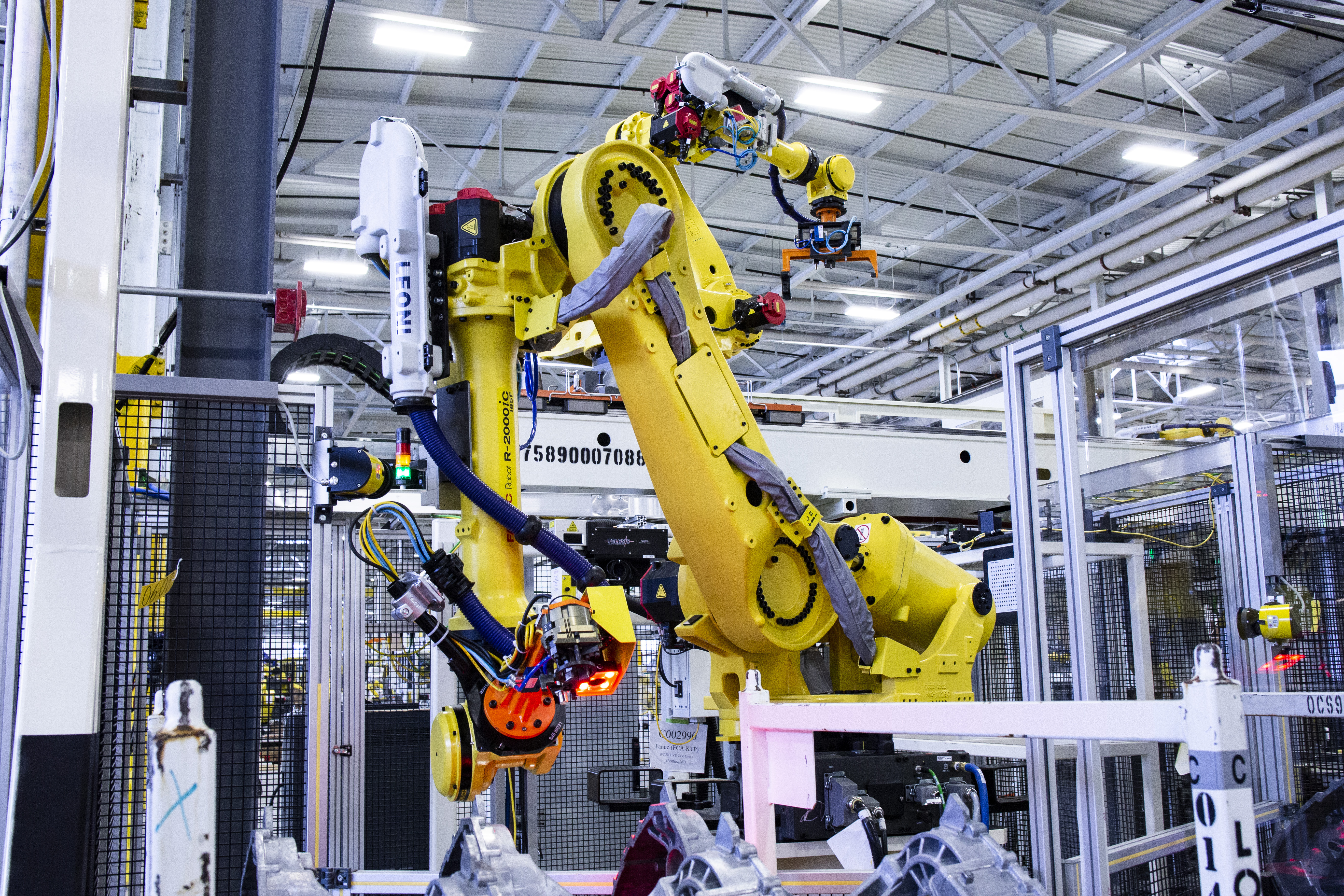
FANUC R-2000 robots handle 100–270 kg with high speed, compact design, and precision, making them ideal for heavy payload material handling and spot welding.
See how FANUC material handling robots are used in real production environments to move, sort, lift, load, pack, palletize, and transfer parts with speed and precision. These application videos highlight robotic material handling solutions for a variety of materials, payloads, and processes, from glass and rubber bales to ingots, molded parts, wood flooring, and flexible feeding systems.
FANUC Robots and 3D vision enable precise handling of varied wood materials, annually delivering safe and efficient, million‑sq‑ft‑scale wood production.
Video courtesy of Globe Machine Manufacturing
A FANUC R‑2000iC robot locates glass panes with a vision system, lifts them using suction cups, and loads them onto racks on dual turntables.
Video courtesy of QComp Technologies, Inc.
A FANUC R‑2000iC/125L robot automatically picks and places rubber bales into boxes, palletizing them across two alternating conveyor-fed cells.
Video courtesy of Sage Automation
A FANUC R‑2000iC/125L with 3D vision identifies and depalletizes metal ingots, using high‑temp vacuum gripping and built‑in safety for fast, precise handling.
Video courtesy of Combined Technologies
A FANUC SR‑20iA uses iRVision and a flexible EOAT to pick parts from a press and place them onto the sintering belt with precise, consistent alignment.
Video courtesy of Gasbarre Products Inc.
FANUC M‑20iB robots sort and nest random‑length boards into trays, forming panels, which an M‑410iC/315 stacks into bundles for shipment.
Video courtesy of Mekanika
Three FANUC robots with iRVision load parts into an injection mold machine, improving cycle time, and accuracy in the tape dispenser molding process.
Video courtesy of Robotic Technical Support Services, Inc. (RTSS)
Video courtesy of ATS Industrial Automation
A FANUC LR Mate 200iD works with a flexible feeder bowl to align and feed assorted parts, enabling adaptable robotic pick‑and‑place for assembly and packaging.
Video courtesy of DevLinks Ltd
Material handling is a critical part of any manufacturing, warehousing, or logistics operation. By adopting automation and robotic material handling systems, manufacturers can improve productivity, increase efficiency, reduce costs, and create safer, more consistent workflows. FANUC offers a wide variety of material handling robots and automation solutions, from compact robots for light part transfer to heavy-payload robots for demanding material handling applications.
Integrating automated solutions into your facility can ensure safe material handling processes. Automated systems can help to prevent accidents by reducing the need for human intervention in tedious and potentially-dangerous tasks.
A well-designed automated material handling system can provide consistent and repeatable results. This is especially important in applications where precision is critical, such as when working with small parts.
Eliminating the need for manual handling can help to improve the accuracy of your material handling process. Automated systems can place components with pinpoint accuracy, reducing the likelihood of errors.
Leveraging automated solutions can help to streamline your material handling process and increase efficiency. Automated systems can work around the clock, ensuring that tasks are completed quickly and efficiently without putting additional strain on your workforce.
Maintaining a workforce to handle material handling tasks can be costly. One of the advantages of handling robots is that you can cut labor costs by limiting the need for manual labor in certain applications, limiting the number of human workers you need to manage these tasks and reducing the risk of costly human error in the process.
Automated material handling systems can help reduce or eliminate costs associated with inefficient material movement, product damage, production delays, and manual labor. By improving accuracy, throughput, and process consistency, robotic automation can help manufacturers optimize their material handling operations from front to end of line.
FANUC material handling robots can automate a wide range of production, packaging, and logistics tasks, helping manufacturers move parts faster, improve accuracy, and reduce manual handling. From pick and place to palletizing, packaging, part transfer, dispensing, and assembly, robotic material handling systems can be configured to support your process from front to end of line.
Pick and place robots move parts from one location to another with speed, consistency, and accuracy. These systems are ideal for part handling, sorting, feeding, packaging, and other repetitive transfer tasks.
Palletizing robots can efficiently stack, ne. Robotic palletizing helps increase throughput, reduce manual lifting, and support more consistent load patterns
Material handling robots can support packaging applications such as filling containers, applying labels, assembling boxes, erecting cartons, sealing bags, and shrink wrapping products. Automated packaging helps increase throughput without sacrificing accuracy or quality.
Robotic part transfer helps maintain a continuous flow of materials throughout your facility. Robots can move components between conveyors, machines, workstations, inspection systems, and downstream processes quickly and efficiently.
Robots can also complete simple assembly tasks such as inserting fasteners, placing components, or joining parts. Automating these repetitive tasks can save time, reduce labor costs, and limit the risk of error.
Robotic material handling systems can improve the movement of materials throughout your facility, from receiving and production to packaging, storage, and shipping. By automating time-consuming or physically demanding logistics tasks, manufacturers can reduce delays, lower labor costs, limit product damage, and improve overall productivity and safety.
FANUC material handling robots support automated material handling across a wide range of industries, helping manufacturers and logistics operations improve throughput, accuracy, safety, and productivity.
When deciding to integrate a new material handling system, consider the following factors before making a purchase to ensure you choose the best fit.
The first thing to consider is the payload and speed requirements of your application. The payload is the weight of the material that needs to be moved, and the speed is the rate at which it needs to be moved. It's important to choose a system that can handle the payload of your application while still meeting your speed requirements.
You will also need to consider the types of material handling robots tools that will be required for your specific application. End-of-arm tools are used to grasp, lift, and move materials, but there are other specialized tools available, as well.
Lighter materials can be handled with less powerful robots, while heavier materials will require a more robust system. You will also need to consider the size and shape of the materials being handled.
Mapping out your current facility layout and available space is important to ensure that the system you select will fit into your facility. You will also need to consider the amount of space required for any ancillary equipment, such as conveyors or sorting systems.
Hiring and retaining a dedicated workforce is a persistent, costly challenge. By automating your material handling processes, you can reduce labor costs by eliminating the need for manual handling in certain applications. When you automate physically-demanding, tedious tasks, you also improve worker safety, making your facility a more appealing place to work.
Learn more about material handling, material handling equipment, and how robotic automation can help improve safety, efficiency, accuracy, and productivity across manufacturing, warehousing, packaging, and logistics operations.
Material handling involves the movement of materials from one point to another within a production facility. It can involve the movement of raw materials, parts, and finished products. Material handling processes are present in a number of environments and industries; warehouse material handling, for example, refers to the movement of products stored in and retrieved from a warehouse.
Material handling equipment is any type of equipment that is used to move materials from one point to another. This includes everything from conveyor belts to cranes, forklifts, and robots.
Material handling robots are used for applications such as pick and place, part transfer, palletizing, depalletizing, packaging, sorting, machine loading, assembly support, and warehouse automation. They help move materials efficiently and consistently throughout a production or logistics process.
Robots can actually help to promote safe material handling in the workplace. By automating the movement of materials, robots can help to reduce the risk of injury to workers.
The goals of material handling are to safely and accurately move materials, parts, products, and/or packages throughout a facility. You can enhance your material handling system with robots and automation to improve productivity and efficiency in your facility while also promoting worker safety.
There are a few ways you can improve how your material handling system performs. An automated handling system is one of the best ways to increase efficiency and productivity, but you can also take the following steps:
PVC pipe is cut, heated, molded, cooled, and quenched; a SCARA robot transfers parts, and a CRX packs accepted pieces for final sealing.
Video courtesy of Delta Technology LLC
Learn how modern cobot arms grip, lift, and move with precision. Explore FANUC cobots built for speed, safety, and heavy payloads.